Calm Alternatives for When Audio Isn't Enough
The best calm app alternative depends on what failed: the audio, the structure, or the fact that you had to press play.

A friend of mine renewed Calm twice. Two years of paying for it, and by his own count, the week he used it most was a vacation week. The one week he didn't need it.
If you're searching for a calm app alternative, some version of that pattern is probably yours too. You don't doubt that the sessions work. You doubt that you'll press play when it counts.
That doubt is worth naming before you pick a replacement. Most of the alternatives on the usual lists have the same flaw built in, and a few genuinely don't.
This is a survey of both kinds. It ends with the one we built, and I'll be upfront about where it fits and where it doesn't.
Why You Want a Calm App Alternative in the First Place
Most people who leave Calm aren't leaving because the content got worse. Calm is excellent at what it does. The library is enormous, the production quality is high, and if the question is "what should I listen to at 10pm," it answers better than almost anything on the market.
The problem sits earlier in the chain. Audio requires you to opt in: notice you're stressed, decide to stop, find headphones, pick a session, press play. Stress degrades the exact faculties that opting in requires: noticing, deciding, stopping.
This isn't a quirk of personality. When your nervous system ramps up, your attention narrows to the threat in front of you, and anything outside that tunnel stops registering as an option. The session you'd benefit from most sits three taps away and might as well be in another building.
Think about the last week that genuinely flattened you. Eight calls, a deadline, a difficult conversation you kept replaying. Was there a moment in the middle of it where scrolling a menu of sessions felt like a reasonable thing to do?
So usage clusters in the easy moments: Sunday mornings, vacations, the night after the hard day instead of the middle of it. I wrote about this pattern in why meditation fails high-performers. The people who need a session most are the least able to start one.
The subscription math tells the same story in dollars. Calm runs about $69.99 a year, and if your sessions happen mostly in the weeks when you're already fine, you're paying for coverage you can't collect on when it matters.
That's not a discipline problem. It's a design problem.
Which means the right alternative depends on which part failed for you: the library, the structure, or the opt-in itself. The three sections below map to those three failures, and being honest about yours will save you a year of subscription fees pointed at the wrong one.
A Stale Library and a Skipped Session Are Different Problems
If Calm's catalog went stale but you still press play on hard days, another audio app will solve it. This is the simplest case, and two apps cover it well.
Headspace is the structured pick. It's a meditation app like Calm, but built around ordered courses instead of a giant menu. You follow a progression, the teaching compounds, and after a few weeks you carry a technique instead of a habit of browsing.
The courses are the difference in practice. Where Calm hands you a large catalog and trusts you to choose, Headspace walks you through the basics first and then builds on them in sequence. For anyone who found Calm's menu paralyzing, that sequencing alone can be worth the switch.
Headspace runs $12.99 a month or $69.99 a year, with a free trial on both plans. That's nearly the same price as Calm, so the choice is about style rather than budget. Calm leans toward atmosphere and sleep content; Headspace leans toward teaching you a repeatable skill.
Insight Timer is the free pick. The free tier is the product: well over 100,000 guided meditations from thousands of teachers, plus a plain timer if you'd rather sit in silence. If Calm's paywall was your complaint, this ends the conversation.
The honest caveat on Insight Timer is variance. With thousands of teachers, quality ranges from excellent to amateur, and you'll spend some time finding the voices that work for you. The upside of that same variance is range: styles and traditions Calm's in-house catalog doesn't attempt.
Both are real upgrades if your sessions still happen. Audio is also worth keeping if your use case is genuinely the evening: winding down, falling asleep, decompressing after the day is over. Those are opt-in moments by nature, and audio serves them well.
But a new library keeps the same opt-in. If your problem was skipped sessions rather than stale ones, you're re-buying the flaw with different narrators.
CBT Apps Ask More of You, and Give More Back
Structured CBT apps swap listening for a method: catch the thought, examine the evidence, reframe it. CBT, cognitive behavioral therapy, is the most-studied talk-therapy approach for stress and anxiety, and app versions turn it into tools you use rather than audio you absorb.
A thought record is the core move. You write down the stressful thought ("this launch is going to fail"), the evidence for and against it, and a more accurate version. It feels mechanical the first few times, and then it starts running automatically in your head, which is the point.
MindShift CBT is the standout free option. It's built by Anxiety Canada, a nonprofit, and it's genuinely free: a thought journal, coping cards, guided exercises, no subscription, still actively updated as of mid-2026.
The coping cards deserve a mention, because they quietly address the opt-in problem. You write a short grounding statement on a calm day, and on a bad day you only have to read it. The writing happens when you're capable of it; the reading happens when you're not.
The research on app-based CBT is fair to both sides. Digital CBT programs show real effects in clinical studies when people complete them; the weak spot is that many people don't. The method works; finishing is the hard part.
That points at the trade: effort. A worksheet asks you to write, not listen, and in exchange the skill outlasts any single session. Audio's effect tends to end when the audio does; a reframe you built yourself is still there next Tuesday.
The catch is the opt-in again, sharpened. If pressing play was hard mid-spiral, opening a journal and writing honest sentences about your own thinking is harder. CBT apps reward you more and demand more at the exact same moment.
If you have a therapist, this category also plays well as a companion. The worksheets between sessions are where CBT was always meant to live; the apps make them portable.
The Calm App Alternative That Comes to You
The third option is a different category entirely: a tool that notices stress and starts the intervention itself. This is what we built Momomoon to do, and it exists because of everything above.
Momomoon reads your body's signals through your Apple Watch: heart rate variability, heart rate, sleep, motion. Here's how the detection works. HRV, heart rate variability, measures the small fluctuations between heartbeats, and it shifts when your nervous system ramps up, often before you'd describe yourself as stressed.
The system also learns your baseline over time. It reads you against you, not against a population average, which matters because a founder's Tuesday and a teacher's Tuesday put different numbers on the same watch.
Context sharpens the read further. Momomoon cross-references your signals with your calendar, so it can tell the difference between a heart rate climbing because you're on a run and one climbing because you're twenty minutes into a board meeting.
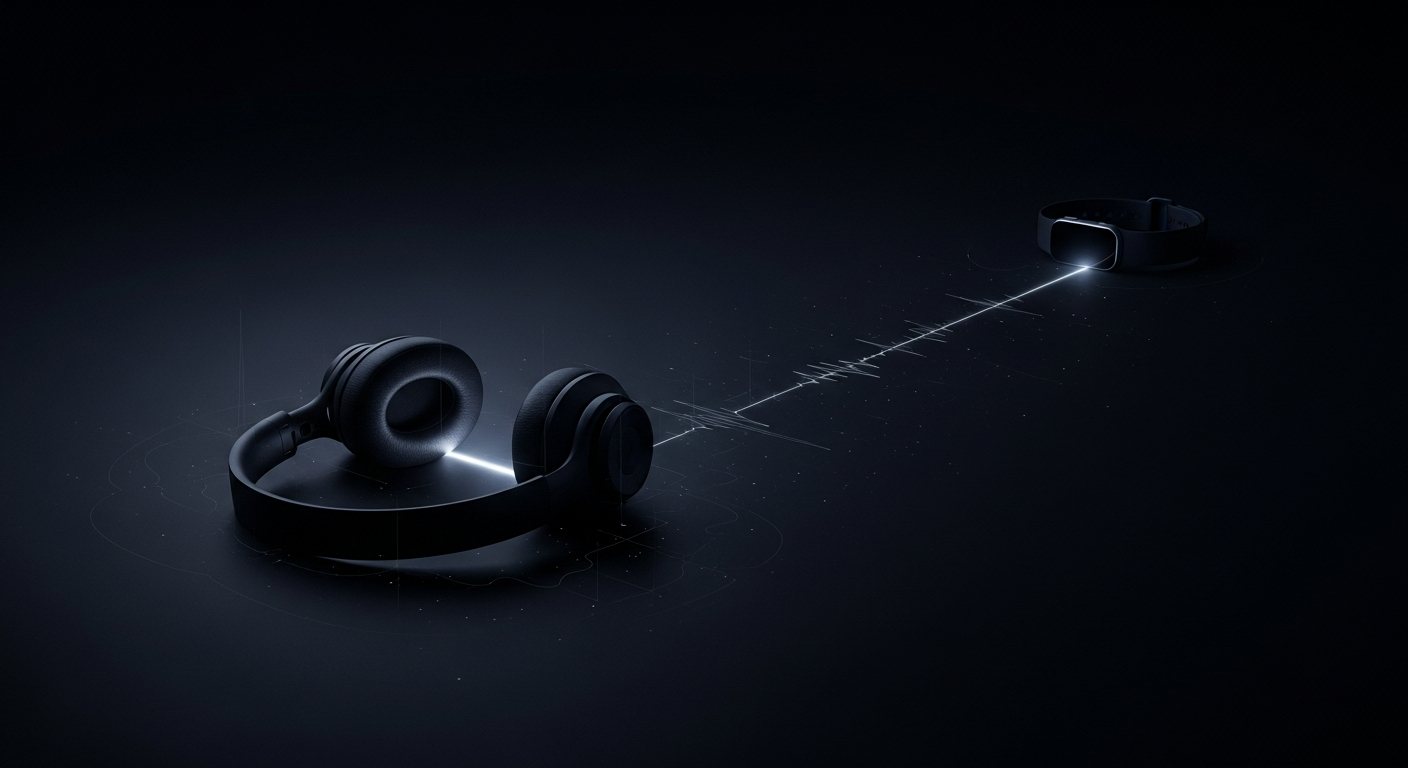
When the signals say stress is climbing, you get a subtle buzz on your wrist. The buzz guides a 90-second haptic reset: you breathe with the vibration pattern, your heart rate follows, and you get back to the meeting. No screen, no headphones, no menu of sessions to scroll.
If the spike keeps climbing and a buzz won't cut through, Momomoon escalates. Momo calls you: a voice, a read on what's happening, and enough time to recover before the spike compounds.
And for the moments when you do have a few minutes and want the structured work, Currents are 3-minute guided CBT sessions. The same method the last section described, compressed to fit between meetings, with no worksheet and no homework.
Notice what's missing from that loop: the intervention finds you. The noticing, the deciding, the starting, the parts that stress breaks first, are handled by the system.
To be fair in the other direction: Momomoon won't narrate you to sleep, and it doesn't have a celebrity reading you a story about a train through Provence. If that's the job, Calm still does it better than we do. The overlap between the two is smaller than the category pages suggest, which is why some people run both.
Match the Alternative to What Failed
The right pick depends on which part of Calm went wrong for you. Run the diagnosis, then choose:
The library went stale, but you still press play on hard days: Headspace for structured teaching, Insight Timer for a huge free catalog.
You want a skill that compounds, and you'll do written work: MindShift CBT, free and legitimate.
Nights are fine and the app already helps you sleep: keep Calm. It earns that spot.
The sessions went unused during your hardest weeks: the opt-in itself failed, and no amount of new audio fixes that. That's the job Momomoon was built for.
Price barely separates the audio options, so don't let it drive the decision. Calm and Headspace land within a few dollars of each other per year, and Insight Timer and MindShift are free. The real cost of a wrong pick is another year of a subscription you use on vacation.
Testing is cheap, too. Every paid option here has a free trial or a free tier, so pick the category that matches your failure and run it through one genuinely hard week, not one pleasant weekend. A pleasant weekend will make every app on this page look good.
Some people land on a stack rather than a single answer. Audio for the evenings, detection and a wrist buzz for the workday, is a reasonable pairing, and cheaper than it sounds given two of the options above cost nothing.
My friend with the two Calm renewals still has the app, and he still uses it on vacation. The difference is that his hard weeks have coverage now too.
That's the test I'd hold any alternative to. Skip the feature pages and ask one question: will this show up in the week that makes you skip everything else?
Momomoon is the intelligence layer for your nervous system. It reads HRV and context signals from your Apple Watch, notices rising stress, and steps in with a 1–2 minute reset — before your day tips over. Free to download, and your first month of Momo is included.

Get new Journal entries when they’re published.
Field notes from the build. No marketing.